Barcelona places 600 companion robots with older residents
A major city deployment moves companion robots beyond small trials—but leaves important questions about outcomes, cost, and privacy.
 Future Companions
AI and robotic companions can help older adults stay independent, safe, and connected at home longer. We document the technology as it actually is—not the hype.

Fresh reporting arrives twice a week. We’re also working to bring new video reports back into the mix every week or two.
A major city deployment moves companion robots beyond small trials—but leaves important questions about outcomes, cost, and privacy.
The new restriction reaches humanoids, quadrupeds, and robot vacuums, raising practical questions for families considering connected home robots.
The four-legged prototype is aimed at older adults living alone, while price, reliability, privacy, and real-world results remain open questions.
We explore how AI and robotic companions can support daily life through presence, check-ins, reminders, monitoring, and eventually physical assistance.
These tools are best understood as support for the gaps between visits—helping people feel safer and more connected while preserving independence.
Tracking the robots, AI companions, and caregiving tools moving from demonstrations into real homes and care settings.

Jill separates early promise from proof across three new developments in home and companion technology.
Read the article →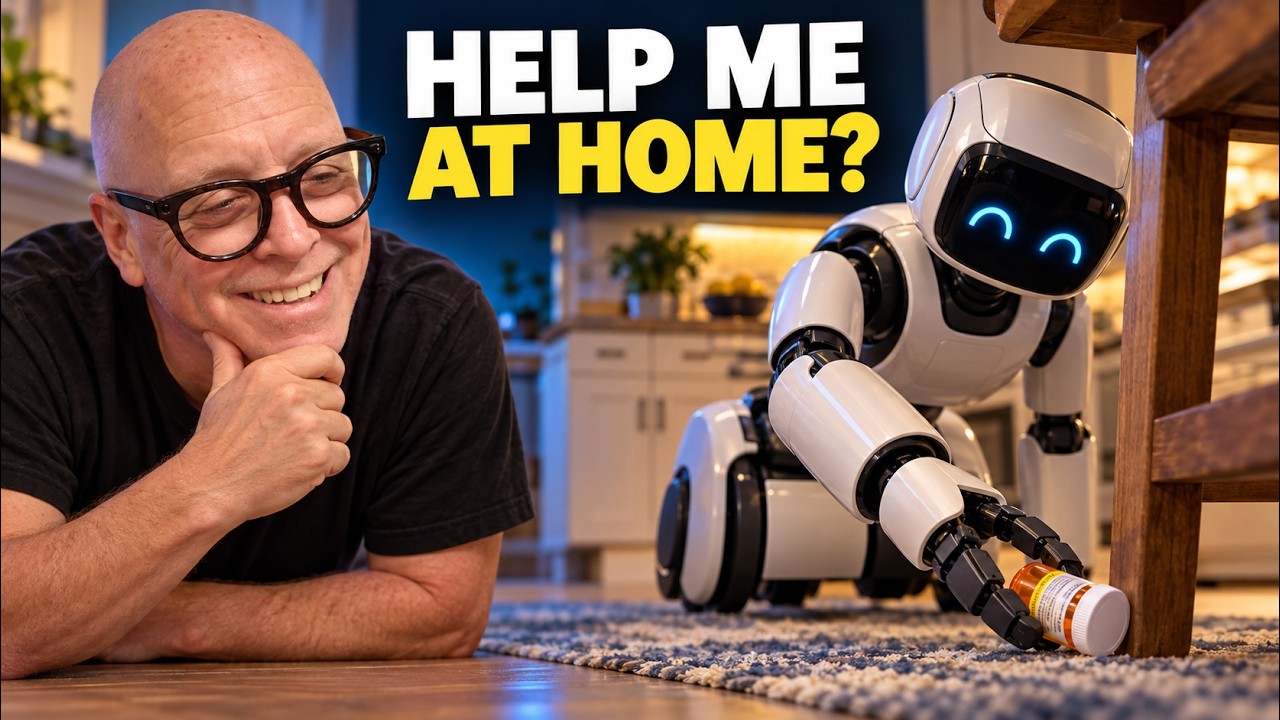
Forget the dancing and the backflips. Episode 5 looks at the small, everyday jobs a home robot would have to do reliably before older adults could trust it.
Read the article →New videos and articles roughly every two weeks.
Watch the Future Companions playlist ↗